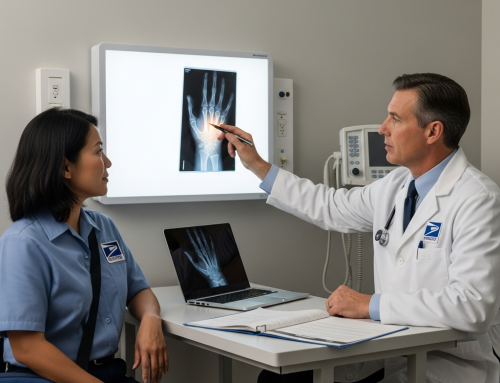
10 Benefits Federal Workers Receive Under FECA

Picture this: you’re a postal worker making your rounds on a Tuesday morning, and you slip on an icy patch near someone’s front steps. Or maybe you’re a federal office worker who’s been quietly ignoring that wrist pain for months – the one that flares up every time you spend another eight hours at your keyboard. Or perhaps you work for a federal agency where something happened on the job that left you shaken, physically hurt, and genuinely unsure what comes next.
Whatever the scenario, there’s one question that tends to cut through everything else in those moments: *what happens to me now?*
That’s not a small question. Your income, your medical care, your ability to pay your mortgage or put food on the table – it all suddenly feels uncertain. And honestly? That uncertainty might be the scariest part of the whole situation. The injury itself is one thing, but the fear of financial freefall? That hits differently.
Here’s what a lot of federal employees don’t fully realize until they need it most: you’re not navigating this alone, and you’re not starting from scratch. The Federal Employees’ Compensation Act – FECA, as most people in the federal workforce know it – exists specifically to catch you when something goes wrong on the job. It’s been around since 1916, which means it’s had over a century to become one of the most comprehensive workplace protection programs in the country. Most private-sector workers would honestly be envious if they knew what was in it.
But here’s the thing – and this is something we see all the time – so many federal employees have only a vague sense of what FECA actually covers. They know it’s *something* related to workers’ comp. They’ve maybe heard a colleague mention it once. But the full picture? The actual breadth of what you’re entitled to as someone who works for the federal government? That often stays buried in HR documents nobody reads until there’s a crisis.
That’s a problem worth fixing.
Because FECA isn’t just basic medical coverage for a broken bone. It’s a layered, surprisingly robust set of protections that covers everything from your immediate medical expenses to long-term wage replacement, from vocational rehabilitation to death benefits for your family. It’s designed to address the reality that workplace injuries don’t just affect your body – they ripple outward. They affect your paycheck, your career trajectory, your mental health, your family’s stability. FECA was built with that ripple effect in mind.
Now, we should be honest about something. The federal workers’ compensation system can be… let’s say *complicated*. The Office of Workers’ Compensation Programs, filing deadlines, different categories of disability compensation – there’s a learning curve, and it can feel overwhelming when you’re already dealing with an injury or illness. We’re not going to pretend otherwise. What we *can* do is help you understand what you’re actually entitled to, so that when you need to advocate for yourself – or help someone you care about advocate for themselves – you’re walking in informed.
Actually, that’s really the whole point of this. Knowledge is weirdly underrated when it comes to benefits. People leave money and support on the table all the time simply because they didn’t know to ask for it.
So in this article, we’re going to walk through ten specific benefits that FECA provides to federal employees. Real benefits, explained in plain language – not legalese, not bureaucratic jargon. We’ll cover the wage replacement programs that keep your income flowing when you can’t work, the medical coverage that goes further than most people expect, and some protections that might genuinely surprise you. Things like continuation of pay, vocational rehabilitation support, and what FECA means for your family if the unthinkable happens.
Whether you’re a federal employee who’s currently navigating a workplace injury, someone who wants to be prepared before anything goes wrong, or maybe an HR professional looking for clearer ways to explain this to your team – this is for you.
You work for the federal government. You show up, you do the job, sometimes in conditions that carry real risk. You deserve to know exactly what’s in your corner when things don’t go as planned.
Let’s get into it.
What FECA Actually Is (And Why It’s Different From What You Might Expect)
If you’ve ever filed a regular workers’ comp claim through a private employer, you might think you already know how this works. You don’t. Not exactly, anyway. The Federal Employees’ Compensation Act operates on its own set of rules – think of it less like a standard insurance policy and more like a specialized benefits system that was built specifically around the realities of federal employment.
FECA has been around since 1916, which is either reassuring (it’s had time to mature) or slightly alarming (some of its language reads like it was written before penicillin existed). The Department of Labor’s Office of Workers’ Compensation Programs – OWCP, which you’ll hear constantly once you’re in the system – administers the whole thing. Not your agency. Not HR. The DOL. That distinction matters more than it might seem at first.
The Basic Promise: What FECA Is Actually Supposed to Do
At its core, FECA exists to make sure that if you’re hurt doing your job for the federal government, you’re not left financially stranded while you recover. That’s the simple version. The more complicated version involves a surprisingly robust set of protections that go well beyond just covering a doctor’s visit or two.
We’re talking about wage replacement, medical coverage, vocational rehabilitation, and more – all wrapped into one program. It’s not perfect, and navigating it can feel like trying to read a map in a foreign language. But the protections it offers are genuinely significant, especially compared to what most private-sector workers have access to.
Injury vs. Occupational Disease: A Distinction That Actually Matters
Here’s something that trips people up. FECA covers two different categories of work-related harm, and they’re treated somewhat differently.
The first is a traumatic injury – something sudden and specific. You slip on ice outside a federal building, a door slams on your hand, you’re in a vehicle accident while on official duty. There’s a clear moment when it happened. A clear cause.
The second is an occupational disease – and this one is trickier. This is when harm develops gradually because of conditions inherent to your job. Chronic back problems from years of lifting. Hearing loss from prolonged noise exposure. Repetitive stress injuries from years at a keyboard. The injury didn’t happen at 2:47pm on a Tuesday – it happened slowly, over time, which can make it harder to document and prove. (More on that in a later section, but worth knowing upfront.)
The “Performance of Duty” Requirement
This is where things get a little counterintuitive. For FECA to apply, your injury or illness has to have occurred in the performance of your official duties. Sounds obvious, right? But the edges of that definition are fuzzier than you’d think.
Generally speaking, commuting to and from work doesn’t count – that’s the so-called “going and coming” rule, and it catches a lot of people off guard. But if you’re traveling as part of your job? Different story. If you’re on a work trip or running an official errand? The coverage picture shifts considerably. It’s one of those areas where the details genuinely matter, and where talking to someone who knows the system – really knows it – can save you a lot of frustration.
Who’s Actually Covered
Federal civilian employees are the primary beneficiaries here. That includes a huge range of workers – postal employees, TSA agents, VA staff, administrative workers across every agency you can think of. If you’re a federal civilian working in an official capacity, FECA almost certainly applies to you.
There are some nuances for certain categories of workers, volunteers, and contractors (contractors are generally not covered – another thing that surprises people). But for the vast majority of the federal workforce, this is your system.
Why This Matters More Than Most People Realize
Here’s the thing. A lot of federal workers go their entire careers without ever needing to file a FECA claim. And that’s great, honestly. But the ones who do need it – whether after a sudden accident or a slow-building occupational illness – often wish they’d understood the system *before* they needed it.
Because figuring out a complex federal benefits program while you’re also recovering from an injury, managing pain, or dealing with the stress of being out of work? That’s a lot to handle at once. Knowing the fundamentals in advance isn’t paranoia. It’s just smart.
Document Everything – And We Mean *Everything*
Here’s something most federal workers don’t realize until it’s too late: FECA claims live or die on documentation. The Department of Labor’s Office of Workers’ Compensation Programs (OWCP) is thorough – some would say ruthless – about evidence. So before you do anything else, start a paper trail.
Write down exactly what happened, when it happened, and who was nearby when it did. Names, dates, times. Did your supervisor see you slip on that wet floor? Get their statement. Was a coworker walking with you when your back gave out? Write it down. The CA-1 form (for traumatic injuries) needs to be filed within 30 days to preserve your rights, and the CA-2 (for occupational diseases) should go in as soon as you connect your condition to your work environment. Don’t wait until you “feel worse.” File now, figure it out later.
One thing people skip? Keeping a symptom journal. Simple notebook, daily entries – how you’re feeling, what you can and can’t do, whether your pain is affecting sleep. Sounds tedious, I know. But when your claim hits a snag six months down the road, that journal becomes gold.
Choose Your Medical Provider Carefully
OWCP authorizes treatment, which means not every doctor’s office is set up to work with the program. Before your first appointment, call and specifically ask if the provider accepts OWCP cases – not just workers’ comp generally, but federal workers’ comp through OWCP. It’s a different billing system, and some offices that technically accept it handle it so rarely they’ll make your life complicated.
Ideally, find a physician who has experience treating federal employees under FECA. They’ll know how to write the narrative reports OWCP actually needs – the kind that connect your diagnosis directly to your job duties using specific medical language. A well-meaning but inexperienced doctor who writes vague notes can inadvertently tank a legitimate claim. Ask around in your agency, check with your union rep, or contact your agency’s workers’ comp coordinator. That coordinator, by the way, is a resource a lot of people never use. They exist to help you navigate this.
Don’t Ignore the Continuation of Pay Window
If you have a traumatic injury – a sudden accident or incident – you’re entitled to up to 45 days of Continuation of Pay (COP) while your claim is being reviewed. This is huge. It means you can keep your salary flowing without burning through sick leave while OWCP decides your case.
But here’s the catch: your agency can controvert your COP if they dispute the claim, and you have to actually be in a leave status or off work for it to kick in. Some federal workers try to tough it out, keep working through the pain, and lose that window entirely. If your doctor says you can’t work – or can only work in a limited capacity – get that documented immediately and communicate it to your supervisor and HR in writing.
Understand the “Light Duty” Offer Game
OWCP encourages return to work, which sounds reasonable… until your agency offers you a light duty position that’s technically within your medical restrictions but is essentially designed to be miserable. You’re generally required to accept suitable work when it’s offered, and refusing without good reason can affect your compensation.
So if you get a light duty offer, read it carefully. Does it actually fit within what your doctor has authorized? Is the commute reasonable given your condition? Does it involve tasks your physician has specifically restricted? You have the right to have your treating physician weigh in. Send the offer to your doctor in writing and ask them to document whether it’s medically appropriate. That step protects you.
Appeal Rejections – They’re Not the Final Word
OWCP denials feel devastating, but they’re genuinely not the end. The appeals process has multiple layers – reconsideration requests, hearings before the Branch of Hearings and Review, and even the Employees’ Compensation Appeals Board. Many claims that were initially denied get approved on appeal, especially when additional medical evidence is submitted.
If your claim gets denied, consider consulting an attorney or representative who specializes specifically in FECA cases. Some federal employee unions offer legal assistance too. The window to request reconsideration is typically one year from the denial date – don’t let the clock run out while you’re feeling discouraged.
The Stuff Nobody Warns You About
Here’s the thing about FECA benefits – they’re genuinely good. Really good, compared to most workers’ comp systems. But the process of actually accessing them? That’s where things get complicated, and where a lot of federal workers quietly give up and walk away from benefits they’ve legitimately earned.
Let’s talk about what actually trips people up.
The Paperwork Mountain Is Real
No sugarcoating this: FECA involves a lot of forms. Form CA-1, CA-2, CA-7, CA-20… it’s alphabet soup, and each one has specific requirements that aren’t always obvious. Miss a field, forget a signature, submit to the wrong office – and suddenly you’re waiting weeks for a rejection letter instead of getting your claim processed.
The solution isn’t to become a forms expert overnight. It’s to find someone who already is one. Your agency’s workers’ comp coordinator exists specifically for this reason – most federal workers don’t even know this person exists. Find them. Introduce yourself. Ask questions.
Also worth knowing: the Department of Labor’s OWCP (Office of Workers’ Compensation Programs) has district offices with staff who can walk you through requirements. They’re not adversaries. Use them.
The 30-Day Reporting Window Catches People Off Guard
You have 30 days to report a traumatic injury after it happens. That sounds like plenty of time until you’re dealing with pain, doctors’ appointments, and the general chaos of being hurt – and suddenly three weeks have passed and you’re panicking.
Miss that window and you don’t automatically lose everything, but you do make your life harder. OWCP can still accept late claims, but you’ll need to explain the delay, and explanations require documentation, and documentation takes time you probably don’t have.
So if you’re reading this and you’ve just been injured? Stop reading. Go report it now. Seriously.
Continuation of Pay Gets Confusing Fast
This is one of the genuinely great FECA benefits – up to 45 days of full pay without using your sick leave while your claim is pending. But agencies sometimes handle COP incorrectly, and workers don’t always know enough to push back.
Some supervisors, honestly, just don’t understand the rules. They might try to substitute your sick leave instead of paying COP, or create obstacles to returning light duty work that effectively forces you back before you’re ready. This isn’t always malicious – sometimes it’s just confusion – but the impact on you is the same either way.
Know your rights here. COP is yours if the injury is traumatic and you’ve filed within the timeframe. Your supervisor’s discomfort with the process doesn’t change that. If you’re hitting a wall, your agency’s HR office or an attorney familiar with federal employment law can help you navigate the pushback.
The Accepted Conditions Problem
OWCP doesn’t accept your whole injury – they accept specific conditions. “Low back pain” might be accepted, but if you later develop nerve damage related to that same injury, you’ll need to file for that separately. Many workers don’t realize this, so they go for treatment and then get blindsided by denied bills.
The fix is to work closely with your treating physician on documentation from the start. Make sure every related condition is noted and connected explicitly to the original injury. It feels overly formal when you’re just trying to get better, but those medical records become the foundation of everything.
When Claims Get Denied
It happens. And it feels devastating, especially when you’re already hurt and stressed. But a denial isn’t the end – it’s actually the beginning of an appeal process that many workers don’t know exists.
You can request a hearing. You can submit additional medical evidence. You can appeal to the Employees’ Compensation Appeals Board. The system genuinely does have multiple layers of review built in, and claims that get denied initially are sometimes approved on appeal with stronger documentation.
Don’t take the first no as the final answer. That’s probably the most practical thing anyone can tell you.
Getting Help Isn’t Admitting Defeat
Some federal workers white-knuckle through this process alone because asking for help feels like admitting weakness, or because they don’t want to seem like they’re “making trouble.”
That instinct is understandable. It’s also expensive. FECA law is specific enough that an experienced workers’ comp attorney – ideally one who specializes in federal cases – can make a real difference in outcomes, particularly for complex or denied claims. Many work on contingency. It’s worth a conversation.
What to Actually Expect From This Process
Let’s be honest with you here – the FECA process is not fast. It’s not broken, it’s not punishing you specifically, it’s just… slow. The federal workers’ compensation system handles an enormous volume of claims, and the machinery moves at its own pace regardless of how urgent your situation feels. Understanding that upfront will save you a lot of frustration.
Most initial claim decisions take anywhere from 45 to 90 days after you file. Some cases get resolved faster if the injury is straightforward and the documentation is clean. Others drag well past that window, especially if there’s any question about whether the injury is work-related, or if your medical records are scattered across multiple providers. That’s just the reality.
In the meantime, your job is to keep showing up – to your medical appointments, to your paperwork, to your communication with your employing agency. Letting things slip during the waiting period is one of the most common ways people accidentally complicate their own claims.
The First Few Weeks After Filing
Right after you submit your claim (either the CA-1 for traumatic injuries or the CA-2 for occupational disease), a few things happen. Your employing agency has to review and forward your claim to the Office of Workers’ Compensation Programs – OWCP – typically within 10 working days. They don’t get to sit on it. Once OWCP receives it, they’ll assign a claims examiner and send you an acknowledgment letter.
That letter matters. Read it carefully. It’ll tell you if anything is missing, and missing documentation is the single biggest reason claims get delayed. Medical evidence, in particular, is crucial – OWCP needs a physician’s statement connecting your condition to your work duties. Without that link clearly established in writing? Things stall.
Actually, that reminds me of something worth mentioning – this is exactly why choosing an OWCP-authorized medical provider early makes such a difference. They know what the documentation needs to look like.
Don’t Mistake Silence for Progress (or Problems)
There’s a particular kind of anxiety that sets in when you’ve filed your claim and then… nothing. No updates. No phone calls. Just waiting. It can feel like your file is sitting in a pile on someone’s desk gathering dust.
Sometimes it is. But more often, the lack of communication doesn’t mean something is wrong – it just means you’re in the queue. OWCP examiners handle large caseloads. If the required timeframes have passed and you genuinely haven’t heard anything, it’s completely appropriate to follow up. Politely, in writing, with your claim number ready.
Keep copies of everything you send them, by the way. Every letter, every medical record, every form. Build your own paper trail because you will need to reference it.
When Benefits Actually Start Flowing
If your claim is accepted, continuation of pay (COP) can begin quickly for traumatic injuries – within days, if your agency processes it correctly. That covers up to 45 calendar days while your claim is being reviewed, which provides some breathing room.
Once OWCP formally accepts your claim and disability is established, wage loss compensation typically begins after that initial COP period. The first check often takes a few weeks after acceptance to arrive. Not ideal, but normal.
Medical bill reimbursement has its own rhythm. Bills submitted through authorized providers usually process faster than out-of-pocket expenses you’re trying to get reimbursed for later. The more directly your providers bill OWCP, the smoother that tends to go.
Realistic Milestones to Watch For
– Days 1-10: Your agency forwards your claim to OWCP – Days 10-30: Acknowledgment letter and any initial documentation requests – Days 45-90: Initial claim decision in most straightforward cases – Ongoing: Medical management, vocational rehabilitation if needed, periodic updates to your disability status
Complex cases – occupational diseases, psychological injuries, disputes about work-relatedness – can take considerably longer. We’re talking months, sometimes more. That’s not meant to discourage you, just to set an honest baseline.
Your Best Move Right Now
Get organized. Seriously – create a folder, physical or digital, and put everything in it from day one. Know your claim number. Know your claims examiner’s contact information once assigned. Respond promptly to any requests for additional information, because delays on your end become delays in your benefits.
The system has real protections built into it for you. Working with it patiently – while staying actively engaged – is genuinely the best approach.
You’ve made it through a lot of information – and honestly, that’s a good sign. It means you’re taking this seriously. Whether you’re dealing with a fresh workplace injury or you’ve been navigating the system for a while now, understanding what you’re actually entitled to under federal workers’ compensation can make a real difference in how you recover, both physically and financially.
Here’s the thing that doesn’t always get said clearly enough: these protections exist because *you* matter. Not as a line item in a budget, but as someone who showed up to do a job and got hurt doing it. The system isn’t perfect – anyone who’s ever wrestled with paperwork at 11pm or waited anxiously for a claim decision can tell you that – but the coverage available to federal employees is genuinely comprehensive when you know how to use it.
You Don’t Have to Figure This Out Alone
That’s probably the biggest takeaway here. Medical care, wage replacement, vocational rehab, survivor benefits… there’s a lot moving at once. And when you’re already dealing with pain or stress or uncertainty about your future, the last thing you need is to feel like you’re lost in a maze with no map.
The workers who fare best – the ones who recover well and get back on their feet, whether that’s returning to their original role or building something new – are almost always the ones who asked for help early. Not because they were weak or didn’t know things, but because they were smart enough to recognize that going it alone costs more time, more stress, and sometimes more money than it should.
Your Health Is the Foundation of Everything
It’s easy to focus on the paperwork side of things and forget that at the center of all this is your actual body, your actual life. Weight, stress, sleep, inflammation – these things don’t just affect how you feel day to day. They can directly impact your recovery timeline, your eligibility for certain benefits, and your ability to return to work successfully. We see this all the time. A workplace injury that might have healed in three months drags on for a year because the underlying health picture wasn’t being addressed alongside the injury itself.
That’s something worth thinking about, whatever your situation looks like right now.
We’re Here When You’re Ready
If any of this resonated with you – if you’re a federal employee who’s been injured, who’s struggling to understand your options, or who’s just realized that your health needs some real attention while you’re in the middle of all this – we’d genuinely love to talk.
No pressure, no sales pitch. Just a real conversation about where you are and what kind of support might actually help. Our team works with federal employees regularly, and we understand the specific challenges that come with navigating FECA while also trying to heal and stay healthy.
Reach out whenever you’re ready. You can call us, send a message, or just stop by. We’ll make you a coffee and we’ll listen.
Because here’s what we know for certain: you didn’t get hurt on purpose, you deserve support, and you absolutely don’t have to white-knuckle your way through recovery alone. There are people who want to help – and we’re proud to be among them.