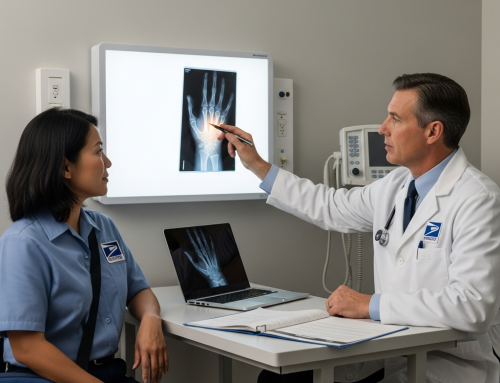
8 Documents Needed for OWCP Injury Claims

The call came at 2:47 AM. Sarah, a postal worker for fifteen years, was rushing to deliver mail before the holiday deadline when she slipped on black ice outside the downtown branch. The sharp crack wasn’t just the sound of her ankle snapping – it was the sound of her world shifting into bureaucratic chaos.
If you’re reading this, chances are you or someone you care about has been there. Maybe not the 2 AM phone call, but that moment when a workplace injury transforms from a medical emergency into a mountain of paperwork that feels impossible to climb. You’re dealing with pain, worried about bills piling up, and suddenly everyone’s speaking in acronyms about forms you’ve never heard of.
Here’s the thing about OWCP (Office of Workers’ Compensation Programs) claims – they’re not designed to be user-friendly. The system that’s supposed to help injured federal employees often feels like it’s working against you instead. One missing document, one incorrectly filled form, one missed deadline… and your claim gets delayed for weeks or even months.
I’ve seen too many people – hardworking folks who’ve dedicated years to public service – get lost in this maze. They’re dealing with real injuries, real financial stress, and real fear about their future, while trying to decode government forms that might as well be written in ancient Greek.
But here’s what I’ve learned after helping hundreds of federal employees navigate this process: the difference between a smooth claim and a nightmare usually comes down to having the right paperwork ready from day one.
Think of it like preparing for a job interview. You wouldn’t show up without your resume, right? Well, filing an OWCP claim without the proper documentation is like showing up to that interview in your pajamas – technically possible, but you’re not setting yourself up for success.
The frustrating part? Nobody tells you what you need upfront. Your supervisor might hand you one form and say “fill this out,” but that’s just the tip of the iceberg. The claims examiner who reviews your case – someone you’ll probably never meet – is looking for specific pieces of evidence to build your story. Without them, even the most legitimate injury claim can get tangled up in red tape.
Sarah learned this the hard way. Her initial claim submission was missing three critical documents. What should have been a straightforward case turned into a six-month ordeal of back-and-forth correspondence, additional medical appointments, and mounting financial pressure while she couldn’t work.
The really maddening part? All three missing documents were things she could have easily obtained if she’d known to ask for them in the first place.
That’s exactly why understanding these eight essential documents matters so much. We’re not talking about nice-to-have paperwork or administrative busy work. These are the building blocks that determine whether your claim gets approved quickly or gets stuck in bureaucratic limbo.
And let’s be honest – when you’re injured and possibly unable to work, you don’t have time for limbo. You need answers. You need approval. You need your life to get back on track.
Over the next few minutes, we’re going to walk through each document you’ll need, but more importantly, I’ll explain *why* each one matters and how to get it right the first time. You’ll learn which forms absolutely cannot have mistakes (spoiler: there’s one that’s particularly unforgiving), what your doctor needs to understand about OWCP requirements, and how to create a paper trail that actually helps your case instead of hurting it.
We’ll also talk about timing – because some of these documents have strict deadlines that nobody bothers to mention until it’s too late. And I’ll share some insider tips I’ve picked up from claims examiners about what they’re really looking for when they review your file.
By the end of this, you’ll have a clear roadmap for gathering everything you need. No more guessing, no more hoping you’ve done it right, no more surprise requests for additional documentation that delay your claim for weeks.
Because here’s the truth – getting injured at work is hard enough. The paperwork shouldn’t make it harder.
What OWCP Actually Does (And Why It Feels Like a Maze)
Think of OWCP – that’s the Office of Workers’ Compensation Programs – as basically the insurance company for federal employees. But here’s the thing… it’s not exactly like your regular health insurance. It’s more like having a very particular uncle who’ll definitely help you out when you’re hurt, but he needs to see all your receipts first. And your medical records. And a letter from your doctor. And maybe your supervisor’s input too.
The whole system exists because – well, let’s be honest – government work can be surprisingly hazardous. You’d think sitting at a desk all day would be pretty safe, but repetitive stress injuries are real, workplace accidents happen, and sometimes that “quick favor” your boss asks for ends up with you in the ER.
The Paper Trail That Actually Matters
Here’s what trips up most people: OWCP doesn’t just want to know that you’re hurt. They want to know the *story* of how you got hurt, complete with supporting characters and a timeline that makes sense. It’s like they’re building a case file – which, honestly, they kind of are.
Every document you submit becomes a piece of this puzzle. Miss a crucial piece? The whole picture stays incomplete. And an incomplete picture means… well, you’re probably not getting the help you need anytime soon.
The system operates on what I like to call “defensive documentation.” They’ve seen it all – people trying to claim old injuries as work-related, accidents that maybe weren’t quite accidents, medical conditions that conveniently appeared right after a bad performance review. So they’ve built safeguards. Lots of them.
Federal vs. Regular Workers’ Comp (Yes, They’re Different)
If you’ve dealt with state workers’ compensation before, you might think you know what to expect. Think again. Federal workers’ comp is like… imagine if regular workers’ comp went to law school and got really particular about everything.
State systems usually handle things locally – your claim might get processed by someone in the same city, maybe even the same building. Federal claims? They could end up anywhere. Your paperwork might travel from your local office to a processing center three states away, then bounce to a medical review team in yet another location.
And the timelines… oh, the timelines. Where state systems might give you a quick yes or no, federal claims can take months. Not because they’re trying to be difficult (well, not entirely), but because they’re dealing with federal money, federal regulations, and federal oversight. Everything takes longer when there are that many layers of approval.
The Documentation Dance (And Why It Exists)
You know how some people are natural pack rats, keeping every receipt and document “just in case”? Those people absolutely crush the OWCP process. The rest of us? We’re scrambling to recreate paper trails that we never thought we’d need.
But there’s actually logic to their madness. Each document type serves a specific purpose – some establish the timeline, others prove the medical connection, and still others show the financial impact. It’s like building a house: you need the foundation documents before you can add the walls, and you need the walls before you can put on the roof.
The tricky part is that some documents serve double duty. Your initial injury report, for example, isn’t just about reporting the incident – it also starts the clock on your claim timeline and establishes your initial credibility. Miss some details there, and you might find yourself explaining inconsistencies months later.
Why This Feels So Overwhelming (Spoiler: It Is)
Let’s just acknowledge the elephant in the room – this process is genuinely complex. Anyone telling you it’s simple is probably selling something or hasn’t actually been through it themselves.
The complexity comes from the intersection of medical issues, workplace policies, legal requirements, and bureaucratic procedures. You’re essentially asking a government agency to agree that: 1) your injury happened at work, 2) it happened the way you said it did, 3) your medical treatment is necessary and appropriate, and 4) you deserve compensation for your time away from work.
That’s… actually a pretty big ask when you think about it. And each of those four points requires different types of evidence. Which means different documents. Which means – you guessed it – a lot of paperwork.
The good news? Once you understand what they’re looking for and why, the whole process starts making more sense. Not easy sense, mind you – but at least logical sense.
Getting Your Paperwork Game Plan Together
Look, I know paperwork feels overwhelming when you’re already dealing with an injury. But here’s the thing – having your documents organized from day one can literally save you months of back-and-forth with OWCP. Think of it like meal prepping, but for your claim.
Start with a simple accordion file folder (you know, those expandable ones from the office store). Create sections for each document type you’ll need. Trust me on this – when OWCP calls asking for that specific medical report from three months ago, you’ll thank yourself for being organized.
The Medical Documentation Sweet Spot
Here’s something most people don’t realize: your initial medical report is make-or-break territory. The doctor who first treats your injury needs to clearly connect your condition to your work activities. Not just “patient has back pain” – but “patient’s lumbar strain is consistent with repetitive lifting described in work duties.”
Actually, let me share a trick I learned from a claims specialist… Before your first medical appointment, write down exactly how the injury happened. Include the date, time, what you were doing, and how you felt immediately after. Bring this written account to your doctor. They’ll often incorporate your detailed description into their report, which strengthens your case significantly.
And don’t just rely on that first report. Every follow-up appointment should include notes about how your condition affects your work capacity. Ask your doctor to be specific: “Cannot lift more than 10 pounds” is infinitely better than “light duty recommended.”
The Witness Statement Game-Changer
Most people skip witness statements because they think they’re optional. Big mistake. Even if your injury seems straightforward, having a coworker vouch for what happened adds credibility that’s hard to dispute.
But here’s the insider tip – timing matters. Get those witness statements within the first week if possible. Memories fade, people change jobs, and suddenly that crucial witness is nowhere to be found. I’ve seen claims delayed for months because someone waited too long to collect statements.
When asking for witness statements, give your colleagues a simple template. Something like: “On [date], I witnessed [your name] experience an injury when [specific description]. The injured employee immediately reported [symptoms/actions taken].” Keep it factual, not emotional.
Supervisor Documentation – Handle With Care
The supervisor’s report can be tricky territory. Your supervisor might be helpful… or they might be worried about liability. Either way, you need to stay on top of this documentation.
Here’s what I recommend: if possible, draft your own version of events first. Email it to your supervisor saying something like, “Hi [Name], I wanted to make sure we’re both on the same page about what happened on [date]. Here’s my recollection…” This way, you’re establishing the narrative early.
If your supervisor seems reluctant or is dragging their feet, don’t hesitate to involve HR. OWCP requires employer cooperation, and most HR departments know this. Sometimes a gentle reminder about federal compliance gets things moving quickly.
The Pay Stub Strategy You Haven’t Heard
Most people think any old pay stub will do for proving wages. Not quite. You want pay stubs that show your earning pattern over at least 12 weeks before your injury. This gives OWCP a clear picture of your typical income.
But here’s the secret sauce – if you worked overtime regularly, make sure those higher-earning pay periods are included. Your compensation calculations are based on your average earnings, so those overtime weeks can significantly boost your benefits.
Also, keep pay stubs for the period after your injury too. If your hours were reduced due to your condition, this documentation supports claims for wage loss benefits.
Digital Backup Insurance
Everything I’ve mentioned? Make copies. Digital copies. Store them in cloud storage with a folder structure that makes sense. Because when (not if) OWCP asks you to resubmit something for the third time, you’ll be ready.
Take photos of documents with your phone as a quick backup method. Sure, it’s not as pretty as a scanner, but it works in a pinch. I’ve seen people lose months of progress because their only copy of a crucial document went missing.
One last thing – keep a simple log of what you’ve submitted and when. OWCP processes thousands of claims, and things occasionally slip through the cracks. Having your own record means you can quickly identify and fix any gaps before they become bigger problems.
Remember, this isn’t just about checking boxes. It’s about building a story that clearly shows how your injury happened at work and how it’s affecting your life. Every document should reinforce that narrative.
When the Paperwork Mountain Feels Impossible
Let’s be real here – gathering eight different documents while you’re dealing with an injury is like trying to solve a jigsaw puzzle in the dark. Your shoulder’s killing you, you can barely concentrate, and suddenly you’re supposed to become a filing expert? Yeah, that’s not happening smoothly for most people.
The biggest stumble? CA-1 and CA-2 forms that read like they were written by robots for robots. I’ve seen people stare at question 14 (“Describe how the injury/disease occurred”) for twenty minutes, completely paralyzed. You know what happened – you lifted that box wrong, or you slipped on the wet floor – but somehow putting it into “official language” feels impossible.
Here’s what actually works: Don’t overthink it. Write it exactly like you’d tell your neighbor. “I was lifting a 40-pound box of files from the floor to my desk around 2 PM. I felt a sharp pain shoot down my left leg when I twisted to place it on the corner of my desk.” Done. The adjuster needs facts, not poetry.
The Witness Statement Nightmare
Finding witnesses is where things get… interesting. Half the time, your coworkers suddenly develop amnesia when you mention OWCP paperwork. It’s not personal – people just panic when they see official forms. They’re worried they’ll say something wrong, or get dragged into a lengthy process, or accidentally hurt your case.
The trick? Make it ridiculously easy for them. Instead of handing over a blank CA-16 and saying “fill this out,” draft the statement yourself first. Write something like: “I saw Sarah slip on the wet floor in the break room at approximately 10:30 AM on March 15th. The floor had just been mopped and there was no wet floor sign visible.” Then ask your witness to review it, make changes, and sign if it’s accurate.
Most people will happily sign something that’s already written – it’s the blank page that terrifies them.
Medical Records: The Black Hole of Bureaucracy
Getting medical records from your doctor’s office should be simple. Should be. Instead, you’ll make three phone calls, send two emails, and probably show up in person before someone remembers to fax that two-page report. And then… it’s the wrong report. Or it’s missing pages. Or the quality is so poor you can’t read Dr. Johnson’s handwriting (which was already questionable to begin with).
Pro tip that’ll save your sanity: When you’re at your appointment, ask the doctor to print a copy of your visit summary right then and there. Most electronic systems can generate this instantly. Get it in your hands before you leave the building. That one piece of paper is often worth more than the formal medical report that takes three weeks to materialize.
Supervisor Forms and the “Uh Oh” Moment
Here’s where things get spicy. Your supervisor needs to complete their portion of the CA-1, and suddenly you’re discovering they don’t actually remember the safety meeting from last month, or they’re not sure about the exact time your injury occurred, or – and this is a fun one – they disagree with your version of events.
Don’t panic. This isn’t necessarily someone trying to sabotage you. Sometimes supervisors genuinely don’t remember details, or they’re worried about liability. The solution isn’t to argue or get defensive. Instead, provide them with as much documentation as possible upfront. Email timestamps, security camera logs, incident reports you filed immediately after the injury – basically, help them remember accurately.
The Documentation Deadline Dance
The 30-day deadline for filing your claim feels like it’s racing toward you at warp speed, especially when you’re spending half your time on hold with medical offices and the other half trying to decipher government forms. But here’s something most people don’t realize – you can submit your claim without every single piece of documentation being perfect.
OWCP would rather see your claim filed on time with some missing pieces than have you miss the deadline trying to get everything perfect. You can always supplement your file later with additional evidence. I’ve seen too many people miss their filing window because they were waiting for one stubborn medical office to return their calls.
The real secret to managing all this? Start ugly. Don’t wait until you have time to organize everything perfectly. Grab a manila folder, throw everything in there as you collect it, and sort it out later. Progress beats perfection every single time when you’re working against a deadline and dealing with an injury.
What Happens After You Submit Everything
So you’ve gathered all eight documents, double-checked everything twice, and hit submit. Now what? Well, here’s the thing – you’re going to be waiting. And that’s completely normal, even though it feels anything but normal when you’re dealing with an injury and mounting bills.
The OWCP doesn’t exactly operate on Amazon Prime delivery schedules. We’re talking government timeframes here, which means… well, you know how that goes. Initial processing typically takes anywhere from 30 to 90 days, and that’s assuming everything’s in order. If they need additional documentation (and they often do), you’re looking at another few weeks minimum.
The Waiting Game – And Why It Takes So Long
I know, I know – when you’re hurt and can’t work, three months feels like three years. But understanding why things move slowly can help manage the frustration.
First, your claim gets assigned to a claims examiner who’s probably handling dozens of cases just like yours. They need to review each document, cross-reference medical records with incident reports, verify employment details… it’s actually pretty thorough work. Then there’s the back-and-forth with medical providers, employer verification, and sometimes additional investigations if anything seems unclear.
Think of it like this – they’re not just rubber-stamping claims. They’re building a complete picture of what happened, how it affects you, and what compensation you’re entitled to. That attention to detail? It actually works in your favor in the long run.
Signs Your Claim Is Moving Forward
While you’re waiting, you’ll likely receive some communication from OWCP. Don’t panic if you get requests for additional information – that’s actually a good sign. It means someone’s actively working on your file.
You might get letters asking for
– More detailed medical records – Additional witness statements – Clarification on work duties – Updated employment information
Each of these requests… well, they’re kind of annoying, but they mean progress. The worst thing is radio silence, which unfortunately does happen sometimes.
When Things Don’t Go as Planned
Let’s be honest – not every claim sails through smoothly. Maybe your initial incident report was too vague. Perhaps your doctor’s notes don’t clearly connect your injury to work activities. Or there could be questions about whether your injury actually happened during work hours.
If your claim gets denied initially, don’t give up. Really. About 30% of initial denials get overturned on appeal. The key is understanding exactly why it was denied and addressing those specific issues. Sometimes it’s as simple as getting your doctor to write a more detailed statement connecting your injury to your work duties.
Staying Organized During the Process
Here’s something they don’t tell you – keep copies of everything. And I mean everything. Every letter you send, every document they request, every phone call you make (write down the date, time, and who you spoke with).
You’d be surprised how often documents get “lost” or phone conversations get forgotten. Having your own paper trail isn’t just smart – it’s essential. I’ve seen cases where having that backup documentation made all the difference during an appeal.
Managing Expectations About Benefits
Once your claim is approved, benefits don’t typically start immediately. There’s usually another waiting period while they calculate your compensation rate and process the paperwork. We’re talking another 2-4 weeks minimum.
And here’s something important – your first payment might not cover everything you expected. OWCP benefits have specific rules about what’s covered and how much. Medical expenses are usually covered at 100%, but wage replacement is typically around 66-75% of your average weekly wage.
What You Can Do While You Wait
The hardest part about this whole process? Feeling helpless while you wait. But you’re not completely powerless. Stay in touch with your doctor, follow all treatment recommendations, and document how your injury affects your daily activities. This information could be valuable later.
Keep working with your employer’s return-to-work coordinator if they have one. Even if you can’t do your regular job, there might be modified duties available that could help with both your recovery and your finances.
Most importantly – and I can’t stress this enough – don’t try to push through pain or return to work too early just because the process is taking forever. That almost always backfires and can actually hurt your claim.
The OWCP process isn’t fast, and it’s definitely not simple. But thousands of federal employees successfully navigate it every year. You’ve got this.
You know what? Dealing with federal workers’ compensation doesn’t have to feel like you’re drowning in paperwork. Sure, there’s documentation involved – more than any of us would prefer, honestly – but each form serves a real purpose in getting you the benefits you deserve.
The thing is, your health and recovery shouldn’t take a backseat while you’re wrestling with claim forms at your kitchen table. I’ve seen too many people put off seeking proper medical care because they’re worried about “doing the paperwork right.” That’s backwards thinking, and it breaks my heart every time.
Your Recovery Comes First
Here’s what I want you to remember: those documents? They’re tools to help you, not barriers designed to keep you out. The CA-1, your medical reports, witness statements – they’re all pieces of a puzzle that tells your story. And your story matters.
When you’re injured on the job, your body is already dealing with enough stress. The last thing it needs is you losing sleep over whether you filled out Form CA-16 correctly or if your supervisor’s statement has the right details. That mental strain? It actually slows down physical healing. Your nervous system can’t tell the difference between the stress of injury and the stress of paperwork – it just knows you’re overwhelmed.
You Don’t Have to Navigate This Alone
Look, I get it. Maybe you’re the type who usually handles everything yourself. You’ve probably been independent your whole life, figuring things out as you go. But this isn’t the time to be a hero about paperwork. Even the most organized, detail-oriented people can benefit from guidance when they’re dealing with injury claims while trying to heal.
Think of it this way – you wouldn’t try to set your own broken bone, right? You’d see a doctor. Well, sometimes you need a different kind of expert to help make sure your claim gets the attention it deserves. There are people who understand these systems inside and out, who’ve helped thousands navigate these exact same waters.
Moving Forward With Confidence
The beautiful thing about getting proper support? It frees up your mental energy for what really matters – focusing on your recovery, spending time with family, maybe even finding some moments of peace in your day. When you’re not constantly worrying about deadlines and documentation, your body can actually do what it’s designed to do: heal.
And here’s something else… you’re probably stronger and more resilient than you realize right now. Getting through a work injury and the claims process? That takes real courage. You’re already showing up, already trying to do things right. That tells me a lot about your character.
If you’re feeling stuck or overwhelmed – even just a little bit – please consider reaching out for help. Whether it’s questions about your medical documentation, concerns about claim deadlines, or you simply need someone to explain what happens next… there are people who genuinely want to help you succeed.
You’ve already been through enough. Let someone who knows these systems help carry some of this load, so you can focus on what matters most: getting better and getting back to your life.